“Programme Erasmus+
Action Type KA210-SCH – Small-scale partnerships in school education/ Partnerstwa na małą skalę – współpraca organizacji i instytucji.
Nr projektu: 2022-1-EE01-KA210-SCH-000083689
Field School Education
Project Title in Estonian: Vana-Kreeka matemaatikud tänases päevas ja STEAM ´I kasutamine õppetöös
Project Title in English: Ancient Greek mathematicians today and the use of STEAM
in teaching
Project Acronym: AnGrMa&STEAM”

SCHOOL EDUCATION: Promoting interest and excellence in science, technology, engineering, and mathematics (STEM)and the STEAM approach. Additional priorities according to the objectives of our project:
HORIZONTAL OBJECTIVES: Addressing digital transformation through development of digital readiness, resilience and capacity. Inclusion and diversity in all fields of education, training, youth and mathematics.
Three topics addressed our project:
- Science, technology, engineering and mathematics (STEM)
- Digital skills and competences
- Creativity, arts and culture.”
The aim of our project is to improve the quality of mathematics learning through the implementation of STEAM, the use of digital technology, the use of modern teaching methods and tools, and the provision of new extracurricular knowledge by developing skills such as entrepreneurship, problem solving and creativity.
The main goals of the project are:
1) Popularization of mathematics, natural sciences and science;
2) Development of digital skills to achieve the integration of mathematics and science through the use of digital programs in different subjects;
3) Creative and critical use of the Internet and new technologies that contribute to social analysis and problem solving;
4) Facilitating cooperation and communication in a digital framework by sharing different materials produced by networks;
5) Educational innovation and improvement of digital skills;
6) Creation of a project website for the creation and dissemination of materials corresponding to the cooperation and selected priorities.
7) Compilation and distribution of study materials.
The project aims to apply innovative teaching and learning methods through workshops and new digital materials. The new methods will make mathematics, science and technology more attractive to students through the implementation of STEAM and the use of digital tools, and students will have a better understanding of the need for topics. Teachers show students how important it is to gain knowledge to understand the world around them and to develop their personality. It is planned to get new ideas and use them in project work. The objectives of the project are closely linked to the project’s priorities, which enable young people to develop curiosity,
creativity, critical thinking and collaboration skills. An international project to promote mathematics and science will help to increase knowledge in the chosen field through the experience of partner countries and to improve social and interpersonal competencies. The skills acquired will lead to better results and give young people the opportunity to better understand science, mathematics, technology, engineering through digital skills, history, creativity, art and culture. Teachers learn from colleagues in partner countries and jointly create new thematic digital materials.
The objectives and project activities help to make the approach to teaching mathematics and science more flexible and interdisciplinary within national education systems, using the STEAM approach and the improvement and implementation of digital skills. The organizations involved want to apply the theory of teaching science, technology, engineering and mathematics through practical activities using well-known Greek mathematicians, combining knowledge with both art and digital technology.”
The target group of the project is teachers from partner schools and students of 7th and 8th grade (13-15 years old) basic schools who are ready to work on the project and share the new knowledge with their fellow students.
It is also desired to involve students with fewer opportunities in project activities. Their active participation in group activities contributes to strengthening self-esteem, filling knowledge gaps, developing social competences and discovering hidden talents, and encourages and motivates them. These students may have health problems or learning difficulties. Participating in an international project gives participating students the opportunity to make contacts with peers from other countries, to make presentations together, to play digital games, to create new materials themselves. Students will be given guidance on how to understand the relevant material and will receive subject support and assistance when visiting partner schools. Teachers from partner schools learn from each other’s experiences and knowledge gained in workshops, and apply gained methods and ideas to create digital materials.”
- Peetri Lasteaed- Põhikool
Country Estonia
Region Põhja-Eesti
City Peetri alevik
Website www.peetri.edu.ee
- Colegiul National Gheorghe Lazar Sibiu
Country Romania
Region Centru
City Sibiu
Website www.cngl.eu
- 4o Gymnasio Dafnis
Country Greece
Region Aττική (Attiki)
City Dafni-Ymittos
Website http://4gym-dafnis.att.sch.gr/


 On March 22, our school held an online meeting, which was one of the project tasks of the Erasmus+ program “Ancient Greek mathematicians today and the use of STEAM in teaching”. We, as students of a Polish Primary School, had the opportunity to meet the participants of the joined project, i.e. students from three European countries: Romania, Greece and Estonia. Under the supervision of Coordinator Ewa Chomańska, we met students from: 4o Gymnasio Dafnis, Colegiul National Gheorghe Lazar Sibiu and Peetri Lasteaed- Põhikool. We managed to do some interesting interactive exercises regarding cultural and mathematical knowledge.
At the beginning of the meeting, all participants were assigned to groups of several people, in which each of us had to perform individual tasks, such as: presenting our name and country of origin, describing our hobbies and discussing some mathematics issues. Then, having the opportunity to consult with each other, we solved many online quizzes together and watched films about the culture of the countries participating in the event.
The aim of the campaign was to develop language skills and communication in English through contact with students of foreign schools. At the same time, we could learn about the cultures and traditions of our countries and make new friends.
As one of the meeting participants, I think it was a very educational experience. Apart from learning together, it was great fun and a great time spent.”
An Unforgettable Erasmus+ Experience in Romania
In the last week of April, a group of students and teachers from our school took part in an Erasmus+ project meeting in the Romanian city of Sibiu. Since last year, together with partner schools from Estonia, Greece, and Romania, we have been participating in the project “Ancient Greek Mathematicians in the Modern World and the Application of STEM in Education.”
The visit to Romania marked the first in-person meeting between our eighth-grade students and the representatives of the schools involved in the project. Although the students had already met online, five days of intensive project work became a truly unforgettable experience for our representatives – Klaudia and Karol.
Romania itself is a beautiful and picturesque country, rich in history and known for its delicious cuisine. Our host school was a well-established secondary institution located in a historic building in the city center. For five days, students and teachers worked in international teams, focusing on the legacy of the Greek philosopher and mathematician – Thales. The Romanian students, thoroughly prepared and guided by their teachers, presented a wide range of mathematical applications – not only in architecture and engineering but also in art. As a result of our collaboration, we created presentations, instructional videos, and a set of applications highlighting Thales’ contributions.
For our students, it was undoubtedly an adventure they will remember for a lifetime. They realized how valuable their English communication skills truly are – not only for effective interaction but also for traveling and exploring new cultures and histories. The project emphasized the practical use of mathematics in everyday life. Besides working at desks and on computers, Klaudia and Karol had the chance to apply Thales’ theorem to estimate the height of various landmarks during sightseeing activities. A highlight of the visit was also a lecture by a Swedish professor at the local university and an excursion to charming Transylvanian towns.
This trip to Romania was not only an opportunity for our students to enhance their mathematical and language skills, but also to form new friendships and gain a fresh perspective on Romania.


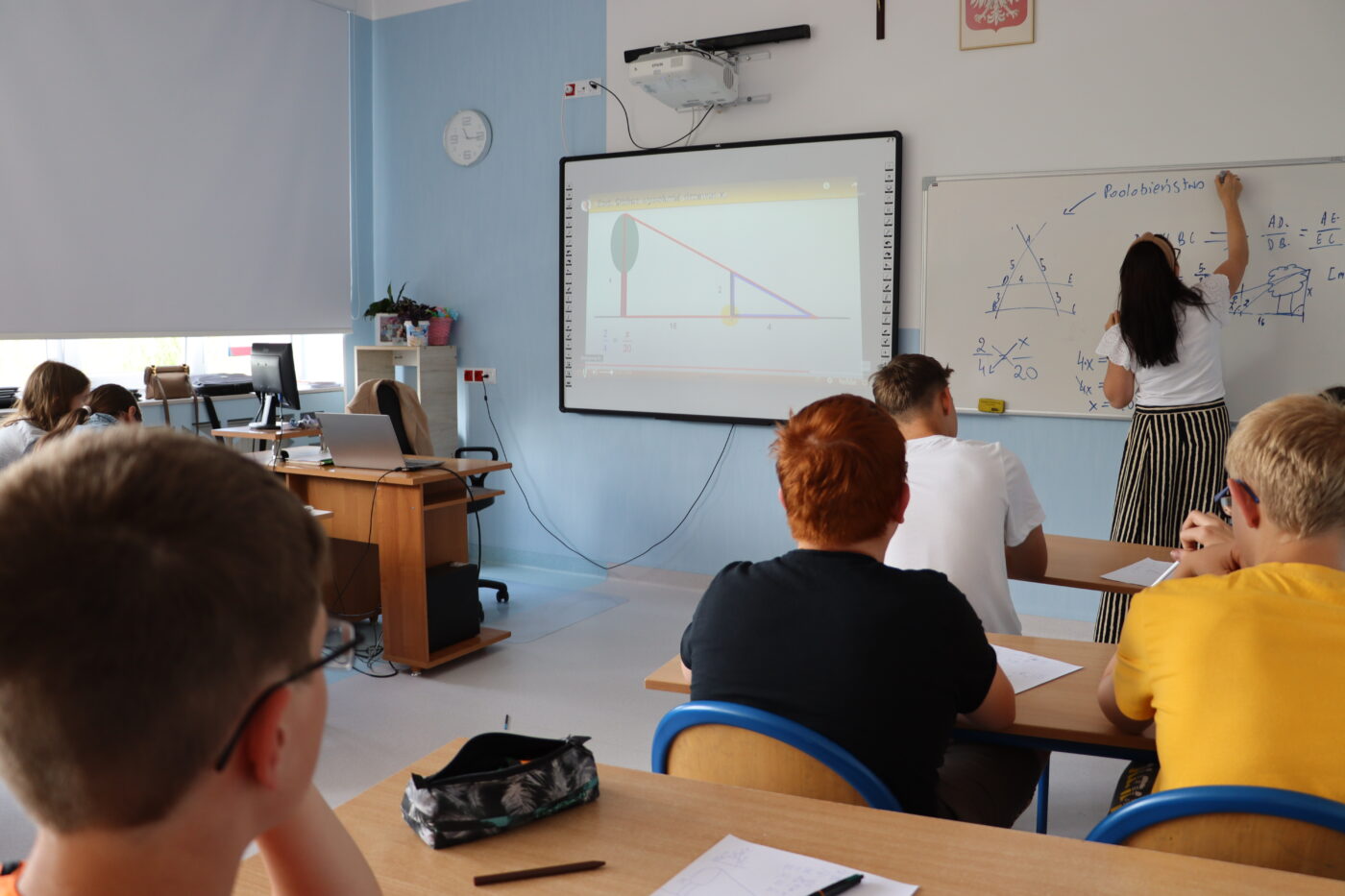
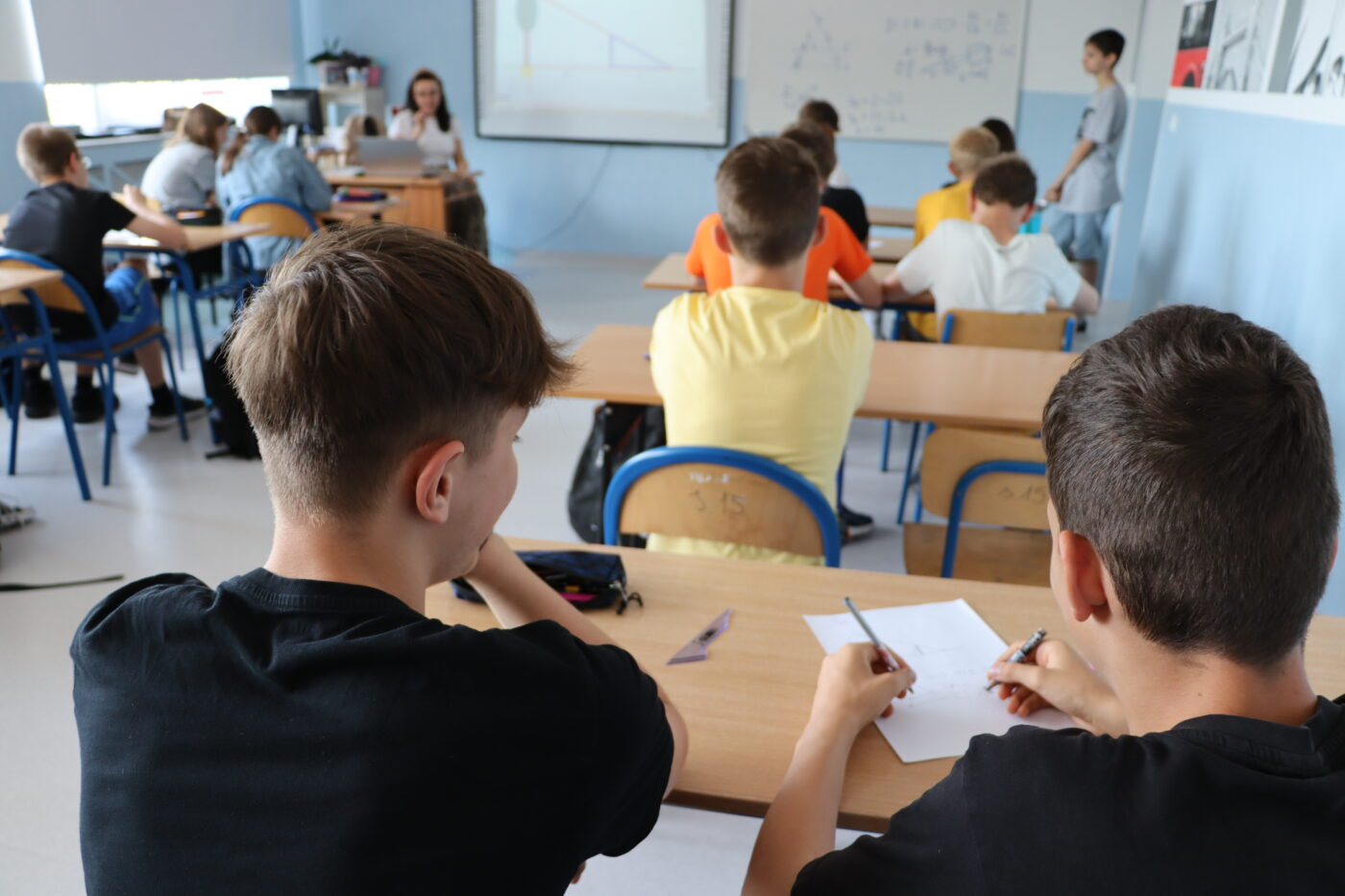
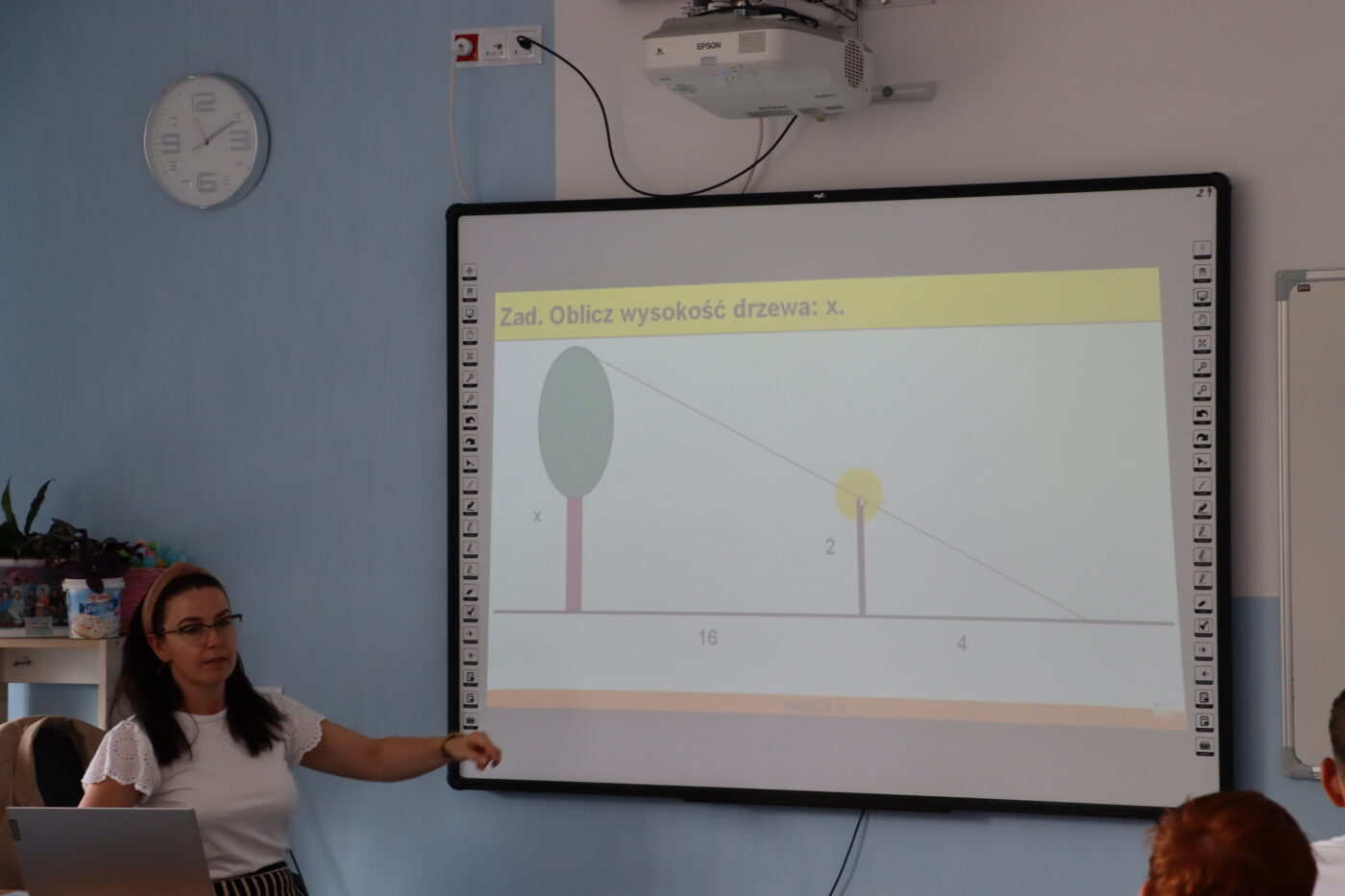
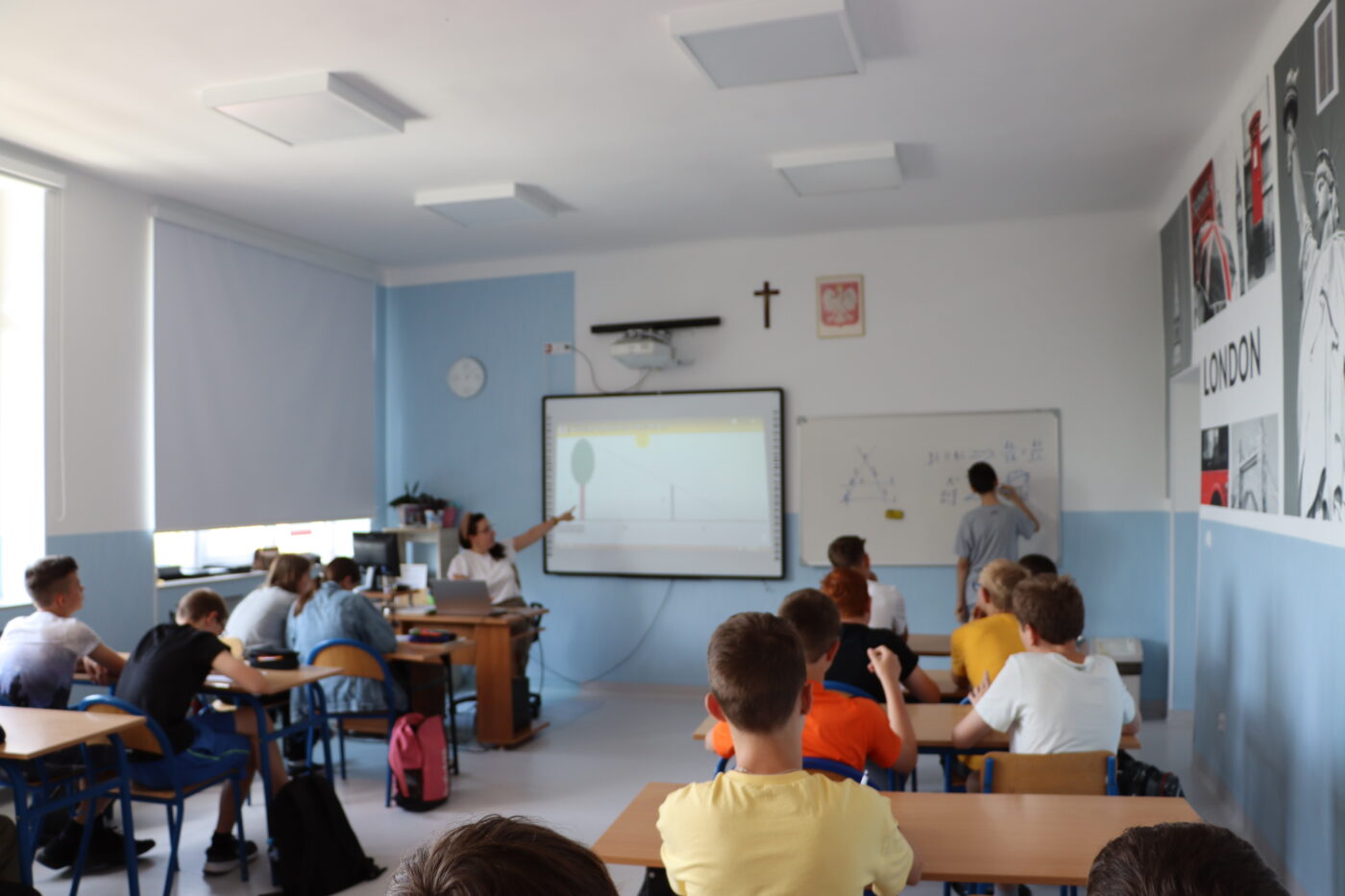
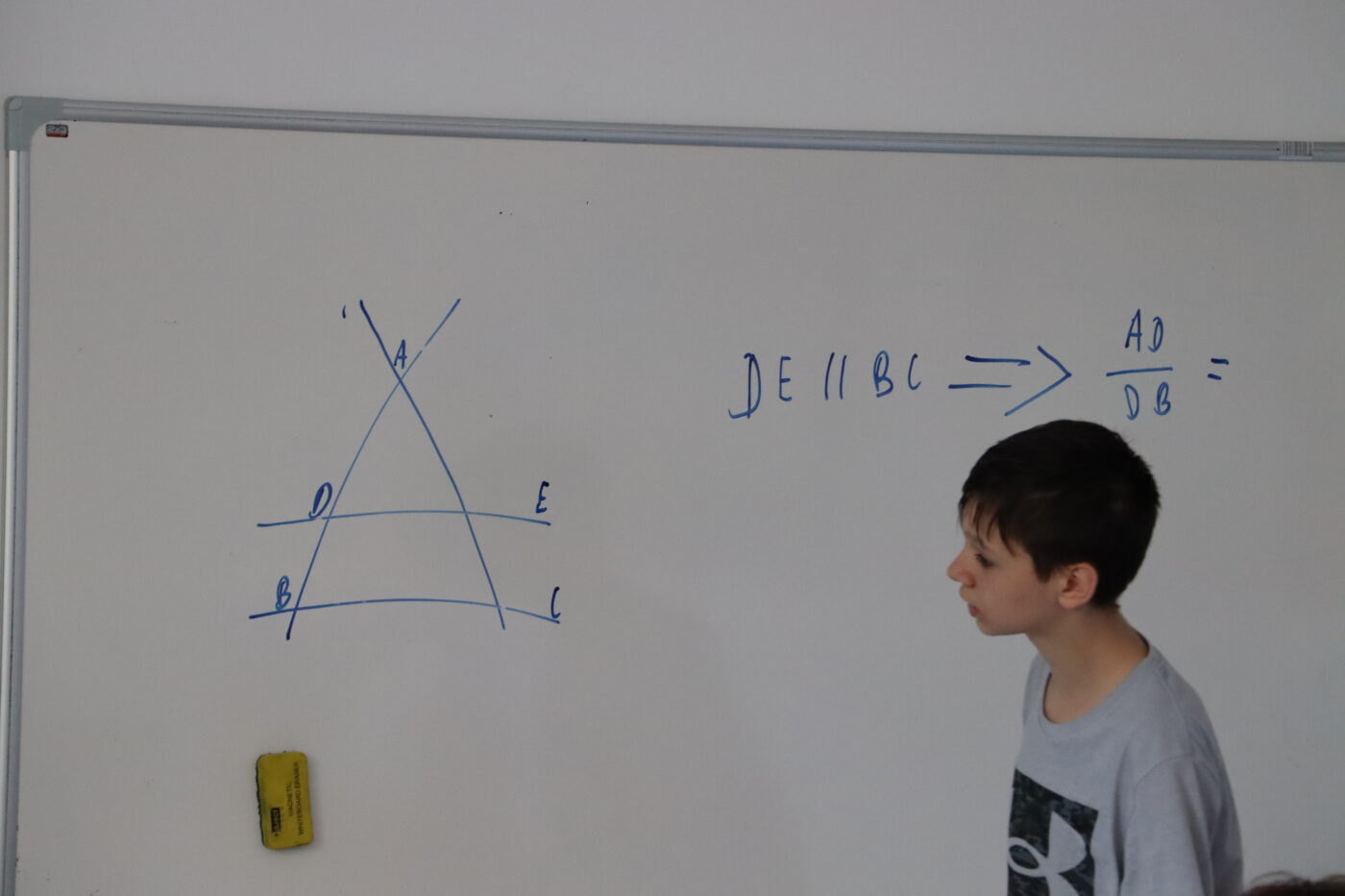
Our recent math workshop brought ancient Greek wisdom to life as students explored Thales’ Theorem through hands-on activities and collaborative problem-solving.
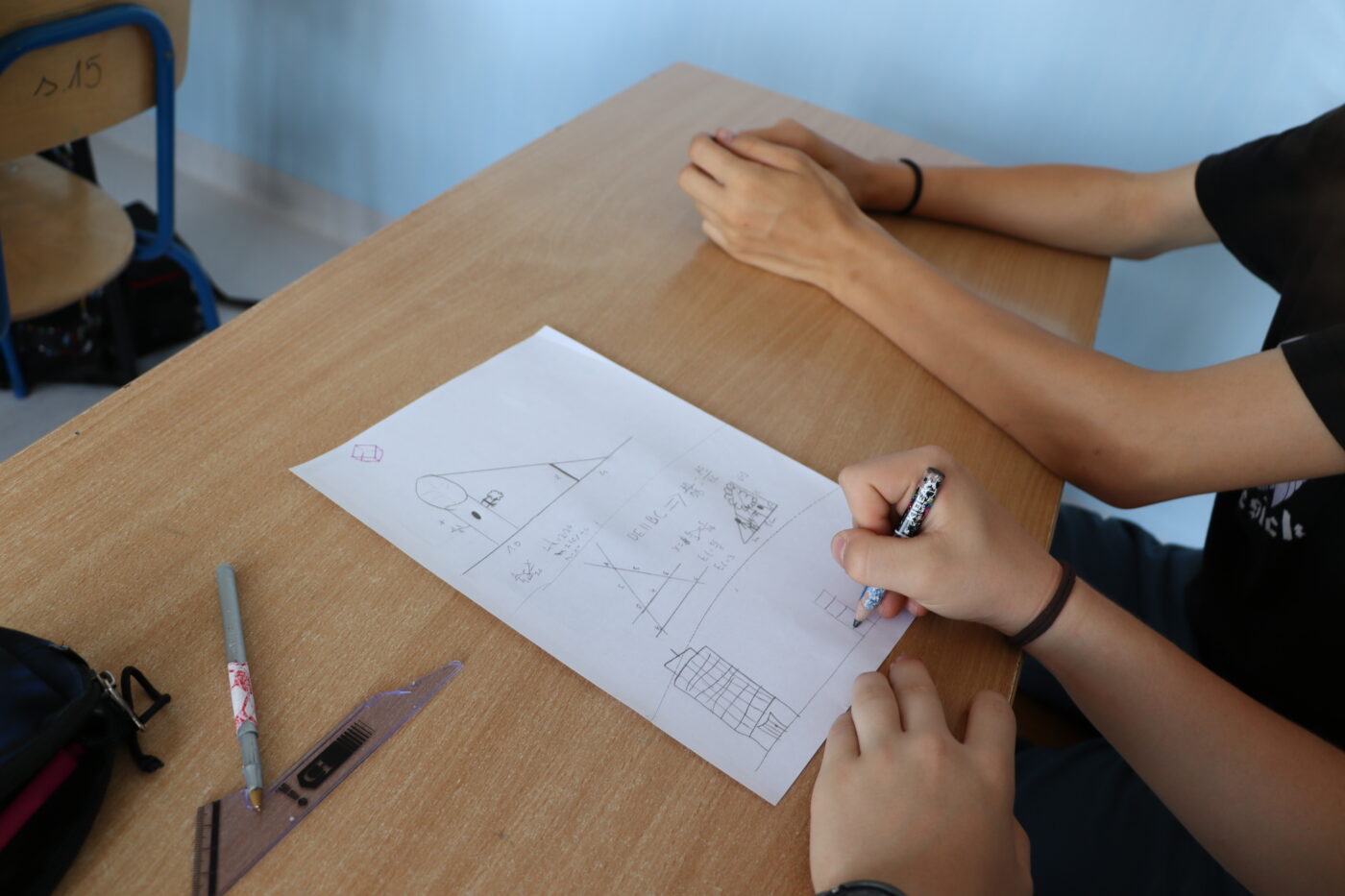
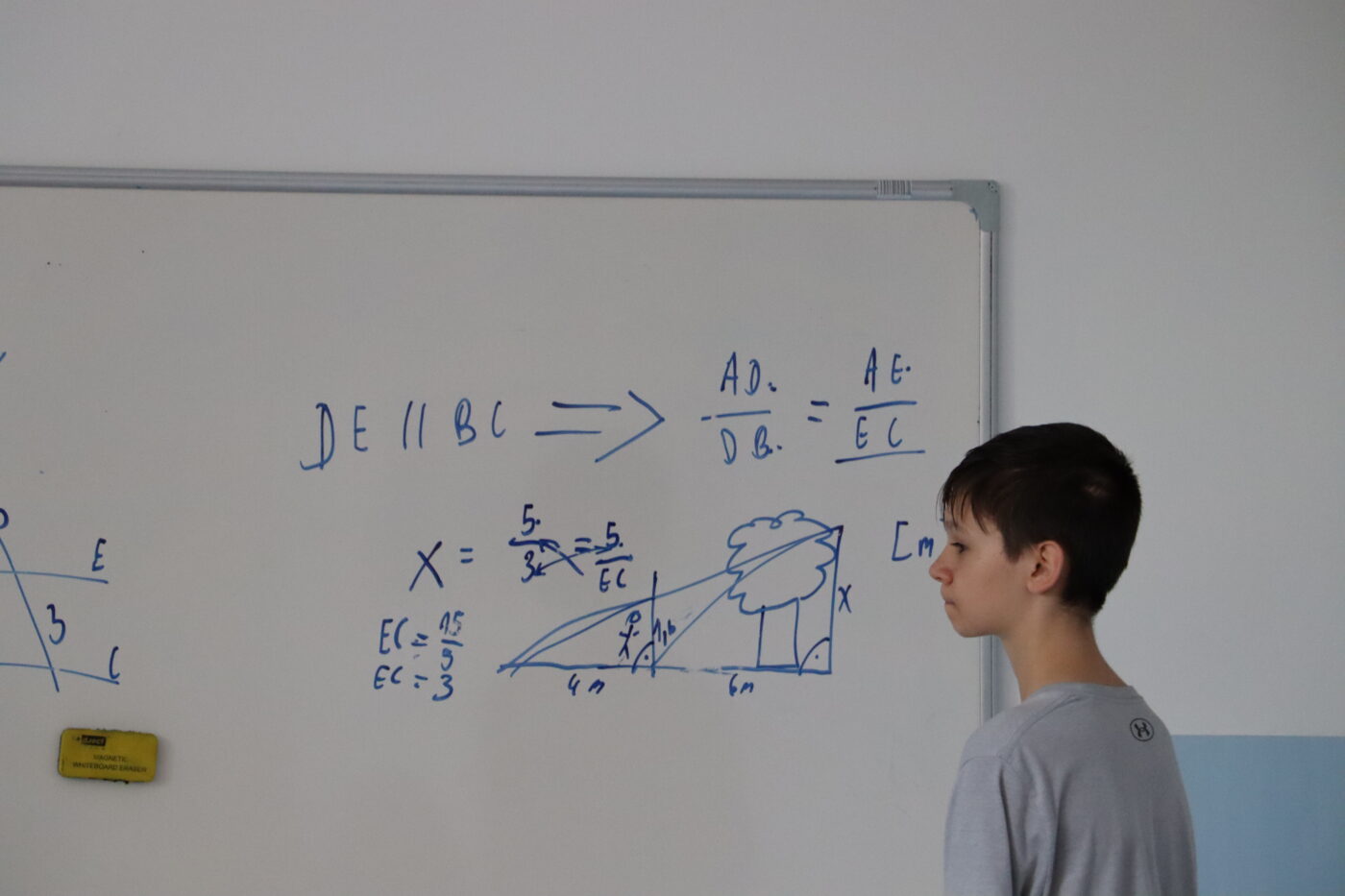
Instead of relying solely on textbooks, participants measured, drew, tested, and observed, discovering for themselves how geometry can be not only logical but also exciting. With rulers, compasses, and plenty of teamwork, students reconstructed Thales’ famous theorem — that any triangle inscribed in a semicircle is a right triangle — and explored its practical applications.
By stepping into the shoes of a mathematician from ancient Miletus, students experienced how mathematics is a tool to understand the world around us, not just a set of rules to memorize. The workshop encouraged curiosity, critical thinking, and the joy of discovery.
It was a day full of creative learning, mathematical wonder, and “aha!” moments. We look forward to more workshops that connect the past and present through the universal language of math!



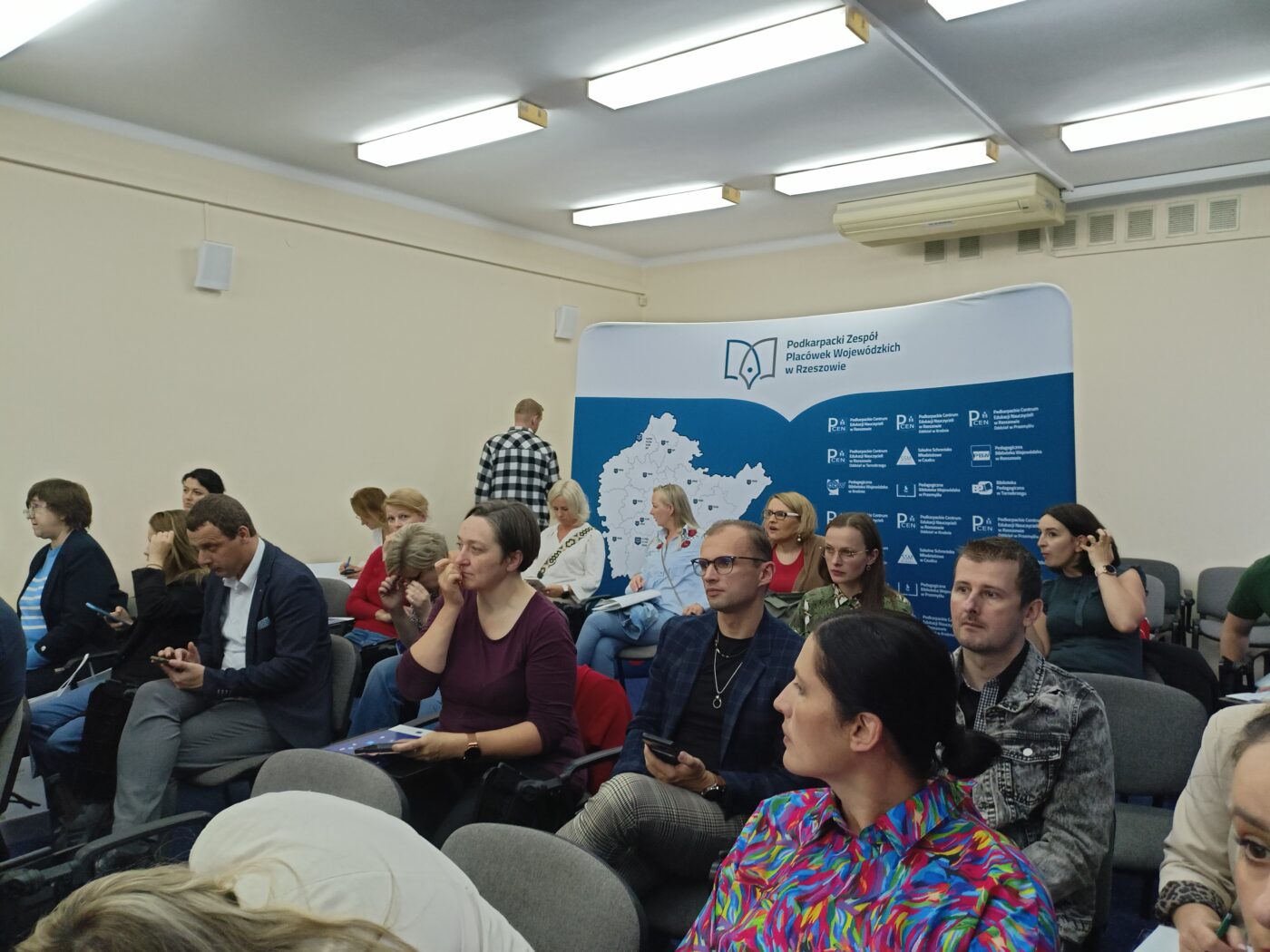
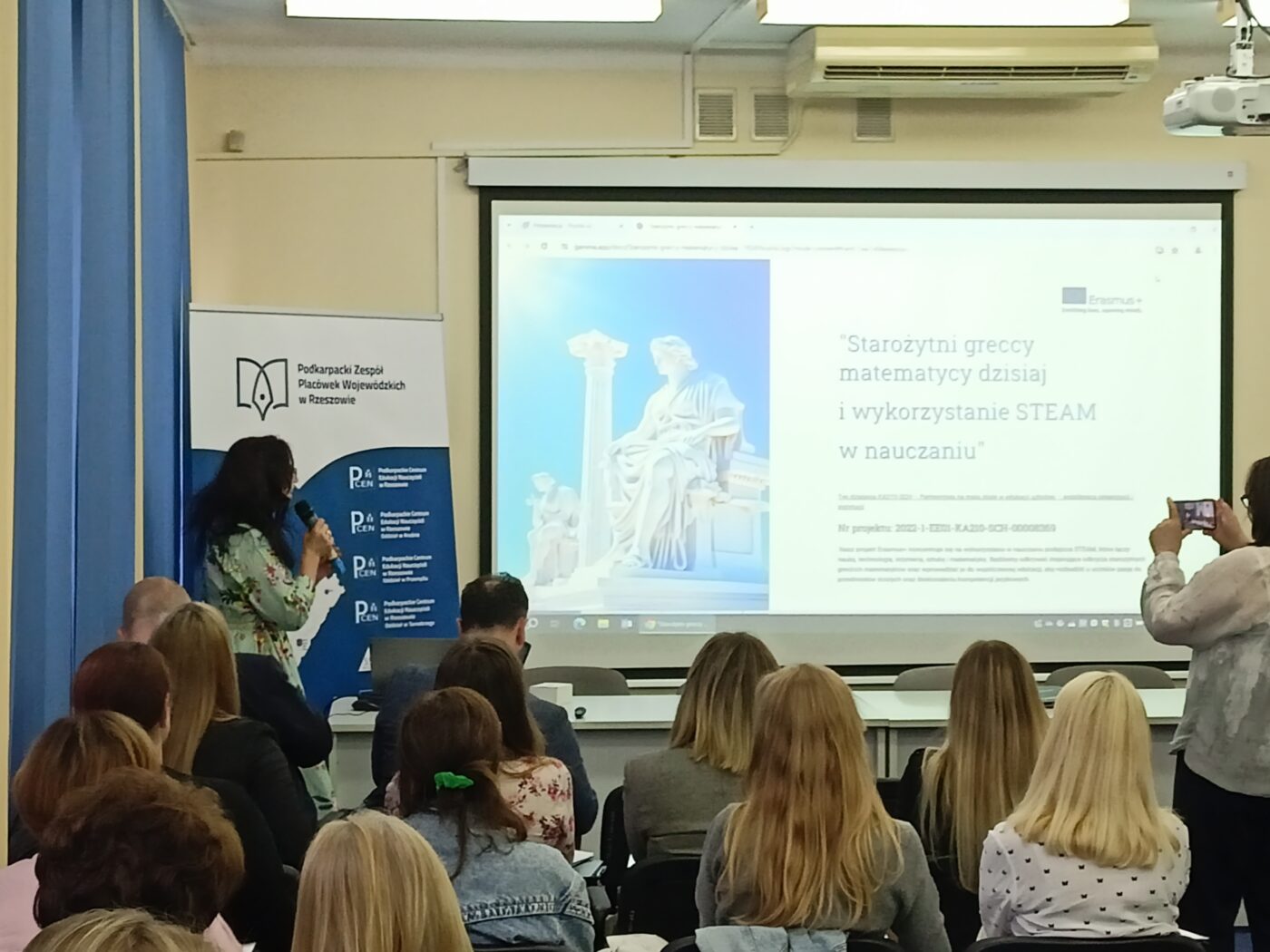
On June 13, 2024, the Regional RPI Information Conference titled “Erasmus+ Programme – Project Planning and Grant Application Guidelines: Preparation for the Autumn 2024 Round” was held at the Training Center in Czudec. The event was organized by the Regional Information Point (RPI) of the Erasmus+ and European Solidarity Corps Programme, operating at the Podkarpackie Educational Development Centre (PZPW) in Rzeszów.
On behalf of Ms. Krystyna Wróblewska, Director of PZPW in Rzeszów, the conference was officially opened by Ms. Małgorzata Szybiak, Deputy Director of the Development and Promotion Department at PZPW, who welcomed attending teachers, Erasmus+ school programme coordinators, and school principals.
The panel of speakers included:
Ms. Izabela Pyra (Consultant Teacher, PCEN Rzeszów Branch at PZPW),
Ms. Elżbieta Komarnicka (Consultant Teacher, PCEN Przemyśl Branch at PZPW),
Mr. Andrzej Dziugan (Deputy Director, PCEN Krosno Branch at PZPW),
Mr. Piotr Jarek (Consultant Teacher, PCEN Rzeszów Branch at PZPW).
Among the participants were also the coordinators of two Erasmus+ projects from the Podkarpackie region:
Ms. Ewa Chomańska from the School and Educational Institution Complex in Horyniec-Zdrój, coordinator of the Erasmus+ KA210-SCH project “Ancient Greek Mathematicians Today and the Use of STEAM in Teaching” (2023–2025),
Ms. Joanna Wiśniewska from the Stanisław Dąbski Primary School in Rudna Wielka, coordinator of the accredited Erasmus+ KA121-SCH project on student and staff mobility in school education (2023–2024).
Project coordinators from PZPW in Rzeszów also took part in the conference, including:
Ms. Iwona Olszówka, Head of the Consultant Teachers Team at the PCEN Rzeszów Branch, overseeing accredited Erasmus+ KA121-SCH projects aimed at staff mobility in the school education sector (2022–2024, 2023–2024),
Ms. Elżbieta Komarnicka, coordinator of the Erasmus+ KA220-SCH cooperation partnership project in school education (2021–2024) titled “Making personal learning experiences possible and visible also in a digital way – Das PerLen-Konzept (PerLe).” Both shared valuable insights and experiences from project implementation.
The conference attracted significant interest, as evidenced by the high turnout of teachers and school leaders from the Podkarpackie region. Participants had the opportunity to deepen their knowledge of the Erasmus+ programme and engage in discussions, sharing experiences in project planning and implementation.
We extend our sincere thanks to the speakers and representatives of Podkarpackie schools for their presentations and for offering many valuable and practical tips related to Erasmus+ projects. The interest shown in the event motivates us to continue our efforts and organize future initiatives aimed at promoting and disseminating knowledge about the Erasmus+ programme.
The conference was moderated by Mr. Jacek Adamowicz, Head of the Development and Promotion Department at PZPW in Rzeszów and Regional RPI Coordinator of the Erasmus+ Programme at PZPW.
More information:



Educational Trip to Estonia as Part of the Erasmus+ Project
From September 22 to 27, 2024, a group of students from our school, accompanied by teachers Ms. Aneta Dydyk and Mr. Lesław Kuchciak, participated in an Erasmus+ mobility project in Estonia. The visit was hosted by Peetri Kool near Tallinn and focused on integrating mathematics with practical, interactive learning methods.
The group arrived in Tallinn early in the morning on September 22. This day was dedicated to settling in, exploring the surroundings of the hotel (Bob W. Ambassador), and locating the nearest bus stop for daily travel to the host school.
The second day was centered on international integration. Students participated in ice-breaking activities that encouraged communication with peers from other countries. Later, mixed international teams worked together on quizzes about the participating countries. In the afternoon, the group explored Tallinn’s Old Town, engaging in a math-based city game where solving Pythagorean theorem tasks was required to move between designated checkpoints.
On the third day, participants created posters about Pythagoras or Euclid and compiled photo collages based on their previous activities. Students also designed geometric mosaics using the GeoGebra platform. In the afternoon, the group visited a Japanese garden and later went on a trip to the seaside.
The fourth day focused on advanced mathematical concepts. Students worked in groups to learn how to draw golden ratio spirals and Fibonacci spirals. Using GeoGebra again, they designed mathematical fractals, including the Pythagoras tree. The day concluded with a hands-on workshop at “Rakett69” in Tallinn’s Ülemiste district, where teams built various structures using cardboard.
On the fifth day, the group visited Paide, where they explored a medieval tower that hosts a historical exhibition on Estonia’s past. The visit included an interactive cooking session, where students prepared traditional Estonian treats using ingredients such as black bread, white chocolate, dried cranberries, and natural yogurt.
The final day began with a closing ceremony at Peetri Kool, where participants received their Erasmus+ certificates and said farewell to their new international friends. The group returned to Horyniec-Zdrój in the early hours of September 28.
This educational exchange provided not only valuable academic insights but also cultural experiences and lifelong memories for all involved.


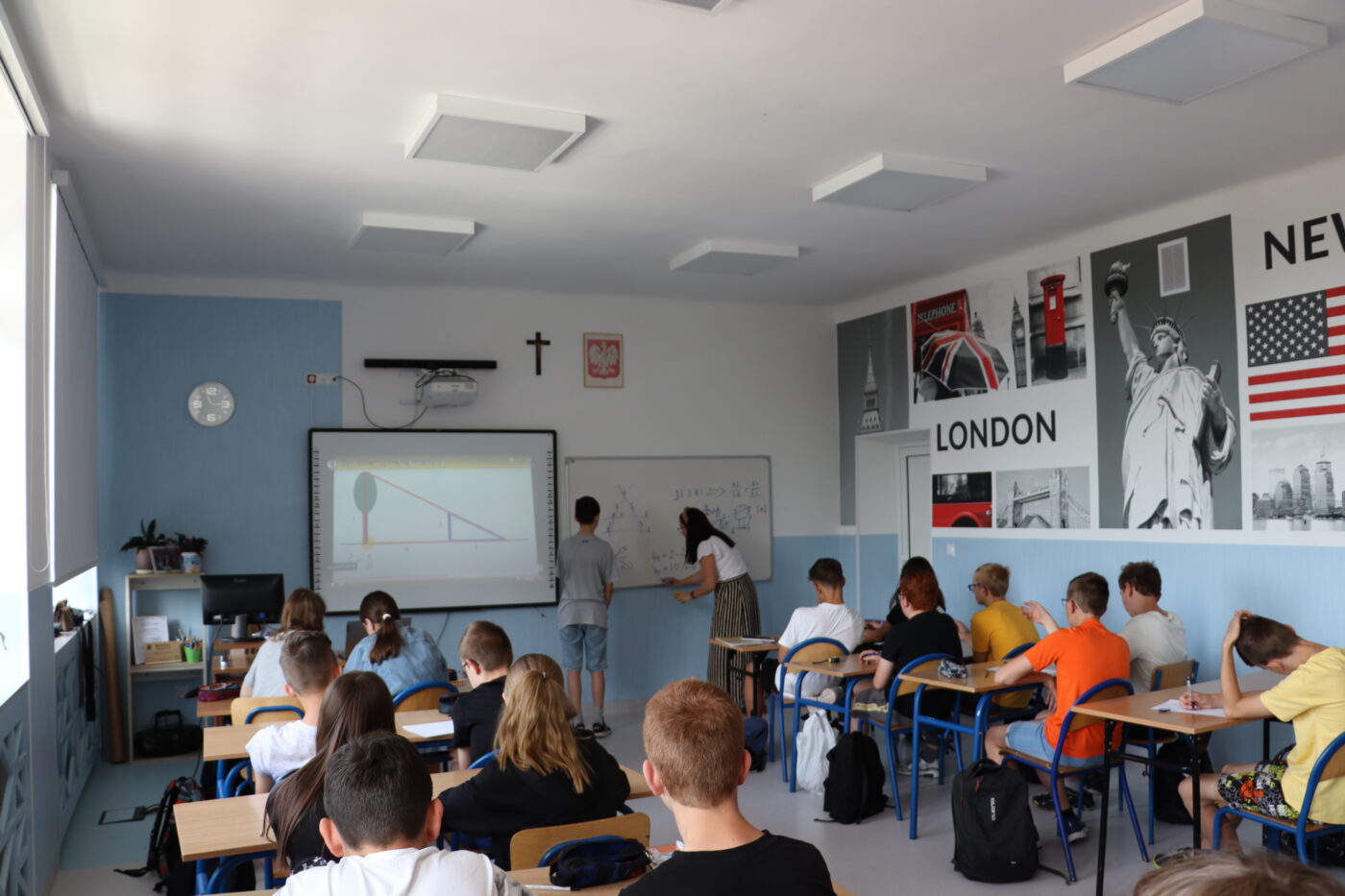
The Erasmus+ program creates unique opportunities for students and teachers of our school to share knowledge and experiences, both in the international and school environment. This year, two 8th grade students, Michał Nazarko and Daniel Marcicki, had the opportunity to go to Estonia, where they deepened their mathematical knowledge. One of the innovative approaches within these activities were classes inspiring the use of the GeoGebra application, which engaged students in the creative use of technology to learn mathematics. As part of sharing knowledge with their peers, the boys, with the support of their IT teacher, Mr. Lesław Kuchciak, conducted a lesson in which their peers learned about the GeoGebra program, combining mathematics with technological skills and the ability to visualize activities.
The lesson using GeoGebra turned out to be not only an effective way of learning mathematics, but also an inspiring experience that strengthened cooperation and communication skills in the class team. Students gained practical technological skills and understood how important visualization is in the learning process. Erasmus+ projects enable students to develop the competences necessary for the 21st century, and lessons like this show how different fields of knowledge can be combined to enrich education.
project coordinator Ewa Chomańska
 On December 16–17, 2024, the coordinator of our Erasmus+ projects Ms Ewa Chomańska, participated in the nationwide debate “Lifelong Learning: Coordination of Actions – Solutions and Challenges” took place. The event was organized by the Foundation for the Development of the Education System (FRSE) in cooperation with the Ministry of National Education, as part of a project co-financed by the European Social Fund Plus.
 The aim of the event was to promote programmatic solutions and regional-level cooperation. Participants – representatives of institutions, ministries, educational and non-governmental organizations – worked on challenges related to the development of skills outside of formal education and on building a system for coordinating actions.
 The debate was opened by Alina Prochasek, FRSE Board Member, and Tomasz Kulasa, Director of the Department of Innovation and Development at the Ministry of National Education. During the meeting, topics such as Local Knowledge and Education Centers (LOWE) and regional projects supporting lifelong learning were discussed.
 Deputy Minister Katarzyna Lubnauer emphasized: “The changing labor market is a challenge for both the state and society. That’s why it is so important that the Polish school system prepares young people for a rapidly changing world.”
 The debate brought valuable insights and proposals for solutions to improve the education system.
#LifelongLearning #Debate #FRSE #MEN #Education
A unique visit took place at the Complex of Schools and Educational Institutions in Horyniec-Zdrój as part of the cooperation of the Erasmus+ Job Shadowing program. Our school was visited by three teachers from the Czech Republic who had the opportunity to observe the teaching methods and organization of the school’s work.
What is Job Shadowing?
Job Shadowing, i.e. work observation, is an excellent method of gaining knowledge about a given profession by directly accompanying a specialist in his daily duties. This practical experience allows you to learn about the realities of work, gain valuable tips and better understand the skills required in a given industry.
Day 1 – Integration and culture
- Collaboration and networking with educational partners.
- Learning about local traditions and history of Horyniec-Zdrój.
- Integration through joint sightseeing and conversations.
Day 2 – Modern teaching methods
- Organization and structure of education in Poland – visit to a primary school and kindergarten, learning about the methods of managing the institution.
- Technologies in education – observation of English lessons using tablets.
- Interactive approach to mathematics – flipped classroom, students in the role of teacher, work with the Geogebra program.
- Outdoor education – how to use the surroundings for effective learning.
- Methods of teaching swimming – PE lesson at the swimming pool and analysis of teaching approaches.
Day 3 – Innovation and international cooperation
- Robotics in education – how building and programming robots develops students’ skills.
- Montessori method in early school education – theory and practical applications.
- Culture and language – lesson about the Czech Republic conducted by teachers from the Czech Republic.
- Handicraft workshops – manual work as an element of education and creativity.
- Exchange of experiences – meeting with teachers, building an international team.
- Assessment and validation of experiences – summary of the Job Shadowing visit, reflection on acquired skills.
Benefits of Job Shadowing
These types of visits are an excellent opportunity for mutual learning, exchange of good practices and establishing international cooperation. Observation of work in a different educational environment allows teachers to gain inspiration for further professional development and implementation of new solutions in their daily work.
We would like to thank our guests for their visit and we hope for further cooperation in the future!
Erasmus+ project coordinator Ewa Chomańska
Students Explore Europe – Workshops Full of Knowledge, Fun, and Openness
Grade III students took part in a unique educational workshop dedicated to Europe. The aim of the event was not only to broaden the children’s knowledge about our continent but also to foster openness, tolerance, and respect for other cultures.
During the workshop, the students had the opportunity to:
learn the names of selected European countries,
discover their location on the map and find out which countries they border,
get to know European currencies, including the euro,
explore the different languages spoken across Europe,
and take a closer look at cultural customs and national symbols.
The workshops combined learning with fun – children worked with maps, watched photos and videos, and took part in language games and thematic quizzes. One of the most popular parts of the event was dedicated to Europe’s linguistic and culinary diversity.
We are delighted that the students participated with such enthusiasm and embraced new knowledge with open minds.
It is incredibly important to teach children from an early age about acceptance, curiosity about the world, and sensitivity to differences among people.
We would like to thank all students and teacher Ms Małgorzacie Smolińskiej for their involvement, and we already look forward to the next European adventures!





Mathematics Among Ancient Ruins – A Report from an Extraordinary Trip to Athens
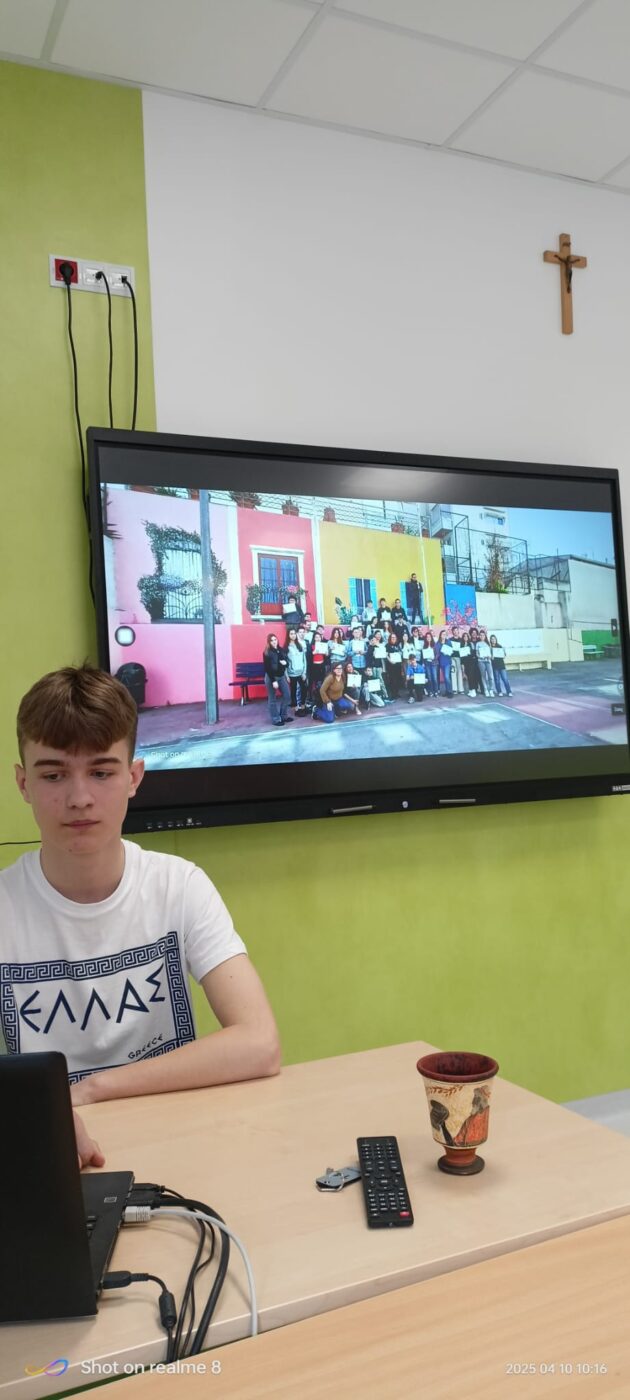
From March 9th to 14th, 2025, students from classes 8a and 8b of the Józef Piłsudski Primary School in Horyniec-Zdrój took part in an extraordinary international educational trip to the capital of Greece – Athens. The main goal of the journey was to develop students’ interests in STEM subjects, expand digital skills, and build intercultural relationships with students from Estonia, Romania, and Greece. The trip provided not only valuable educational experiences but also unforgettable emotions and memories.
The adventure began with a thrilling journey – from Horyniec through Warsaw all the way to sunny Athens. After arrival and check-in at a comfortable hotel in the seaside district of Faliro, the students were immediately immersed in the fascinating atmosphere of both ancient and modern Greece.
The first meeting with students from partner schools took place at 4o Gymnasio Dafnis, where we were warmly and cordially welcomed. The local youth presented an artistic performance and invited everyone to take part in a creative outdoor game titled “Math is from Ancient Greece, Ancient Rome, Today”, which cleverly combined mathematical knowledge with elements of history and modern life.
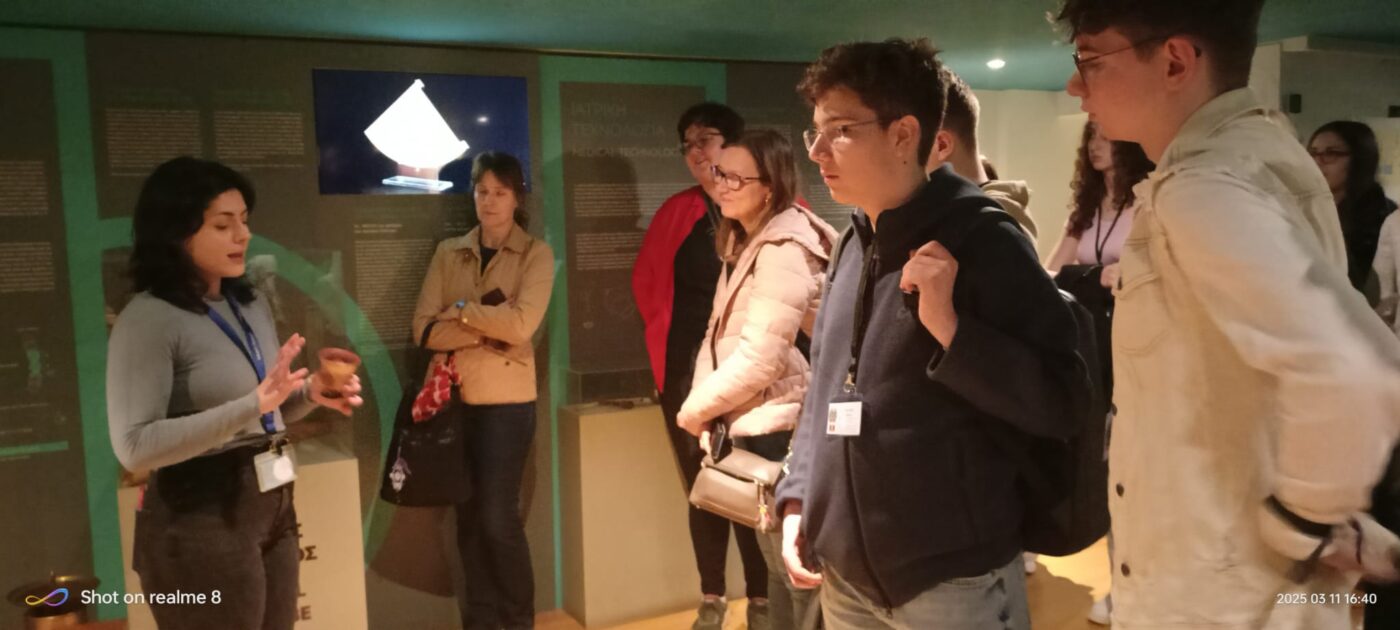
In the following days, the students explored the secrets of ancient science, participated in computer-based classes and project workshops. They created posters and presentations, and analyzed famous quotes from great Greek thinkers. A particular highlight was the visit to the Kotsanas Museum of Ancient Greek Technology, where they admired reconstructions of mechanisms such as the spiral of Theodorus and the famous Antikythera mechanism.
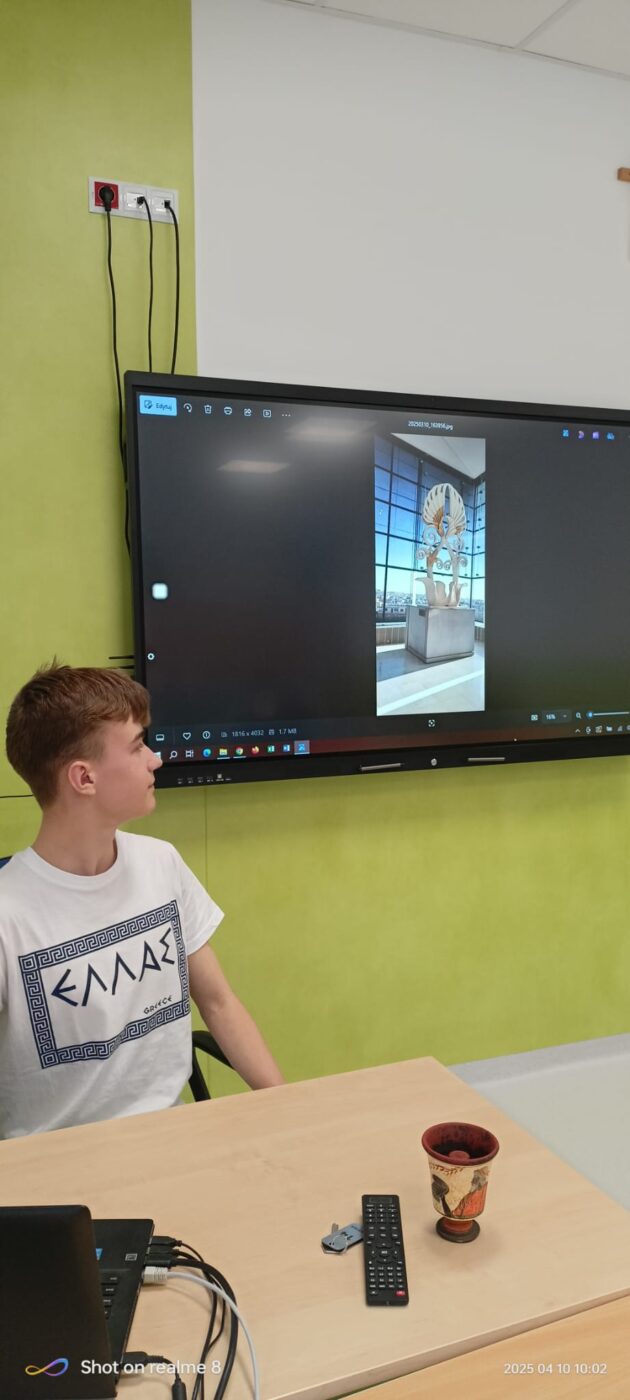
A major highlight of the trip was the visit to the majestic Parthenon – the pride of ancient Athenians, standing atop the Acropolis. The monumental structure made a huge impression on all – its harmony, perfect proportions, and architectural brilliance left everyone speechless with awe. Right next to it, at the modern Acropolis Museum, students had the chance to closely observe sculptures, artifacts, and models that vividly illustrated the everyday life and religious practices of ancient Greeks.
Another unforgettable experience was the excursion to Corinth – a place full of magnificent ruins and reminders of Greece’s former glory. It was there that students discovered geometric patterns and applications of mathematics in the everyday lives of ancient people.
The final day was filled with emotion – a ceremonial project summary, the awarding of certificates, and a shared lesson in traditional Greek dance, which brought all participants together in an atmosphere of joy and mutual respect.
This six-day trip not only introduced students to the history and culture of Greece but, above all, proved that learning can be a fascinating adventure – full of color, emotion, and new friendships. We returned home richer in knowledge, experience, and memories that will remain in our hearts for years to come.


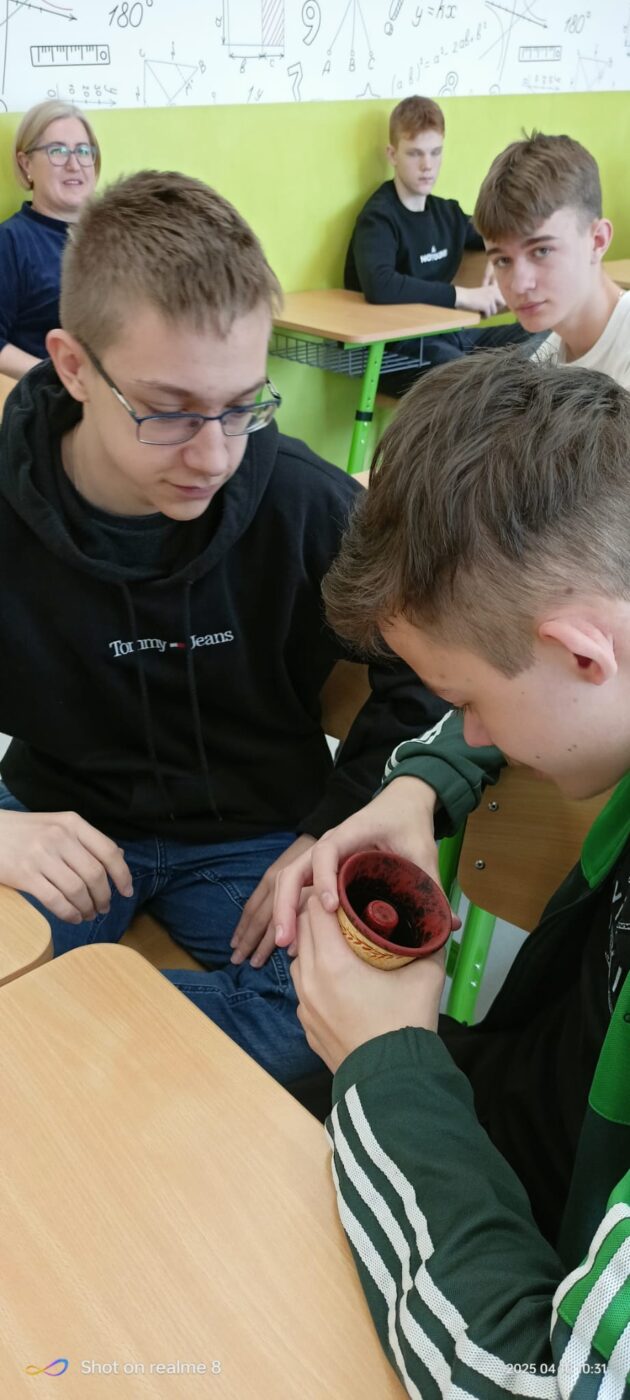
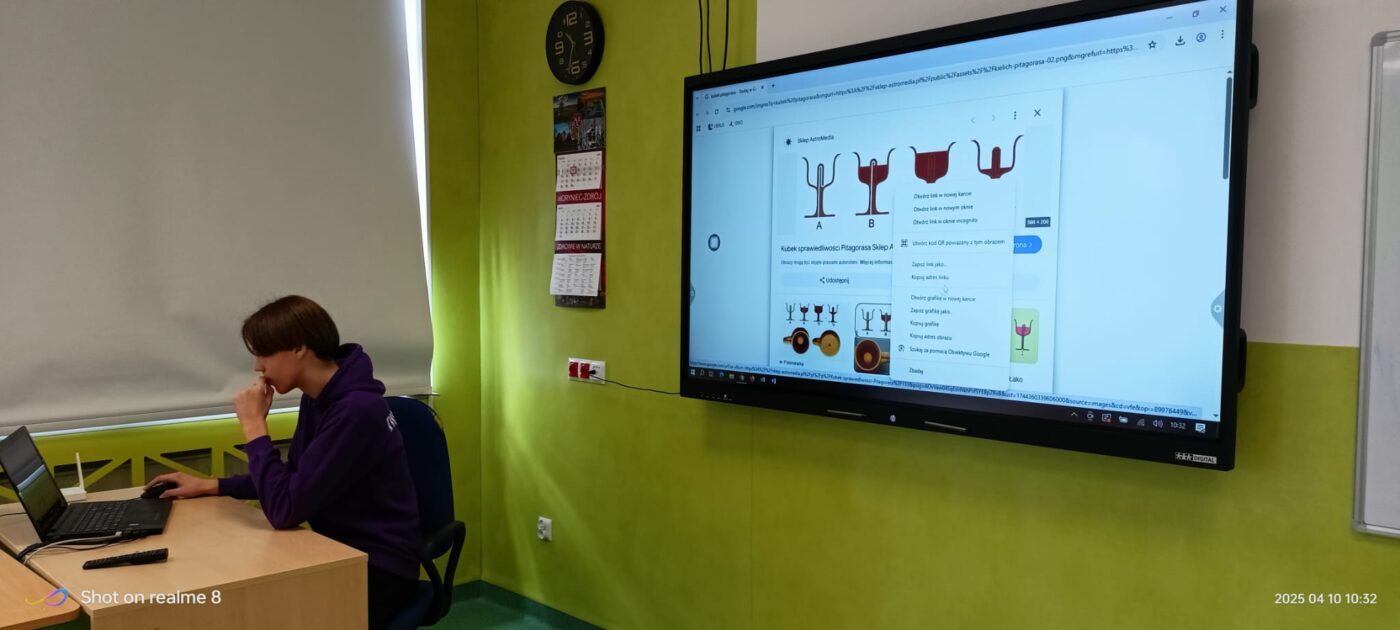
At first glance, it looks like an ordinary drinking cup — but pour in too much liquid, and it all mysteriously disappears! Students were fascinated as they explored how this clever design works, combining math, physics, and a bit of ancient engineering.
Through hands-on experimentation, they learned about siphons, pressure, and symmetry, and how the cup secretly teaches a lesson in moderation — just as Pythagoras intended. Step by step, students uncovered the logic behind the cup’s inner tube and the surprising consequences of overfilling it.
This workshop wasn’t just about formulas — it was about curiosity, discovery, and the fun of finding out how things work. By blending history with real-world problem-solving, students saw how mathematics goes far beyond the classroom.
Who knew a simple cup could hold so much knowledge?







On April 8, 2025, we participated in another online meeting conducted within the Erasmus+ project. This time, we focused on working together on a creative task—creating an Escape Room on the theme of great Greek mathematicians and mathematical figures.
The meeting was attended by students and teachers from partner countries: Romania, Estonia, and Greece. The atmosphere was pleasant and promoted free cooperation. We met many interesting, open-minded people who, like us, joined the project activities with commitment and a smile.
Working together allowed us not only to have fun but also to develop our communication skills in English and cooperate with an international team.
During the meeting, there was also a vote for the project logo, in which everyone could cast their vote for the graphic design previously selected and prepared by the students.
It was an inspiring experience that will remain in our memories for a long time!”
presentation:

We are happy to announce the results of our project logo competition! From among many creative and inspiring proposals, the competition committee selected the winners based on the average score awarded by the jury.
1st place – logo no. 11, with an average score of 7.58
2nd place – logo no. 16, with an average score of 6.92
3rd place – logo no. 12, with an average score of 6.69
4th place – logo no. 14, with an average score of 6.22
5th place – logo no. 15, with an average score of 6.03
We would like to congratulate the authors of the winning projects and thank all participants for taking part in the competition!

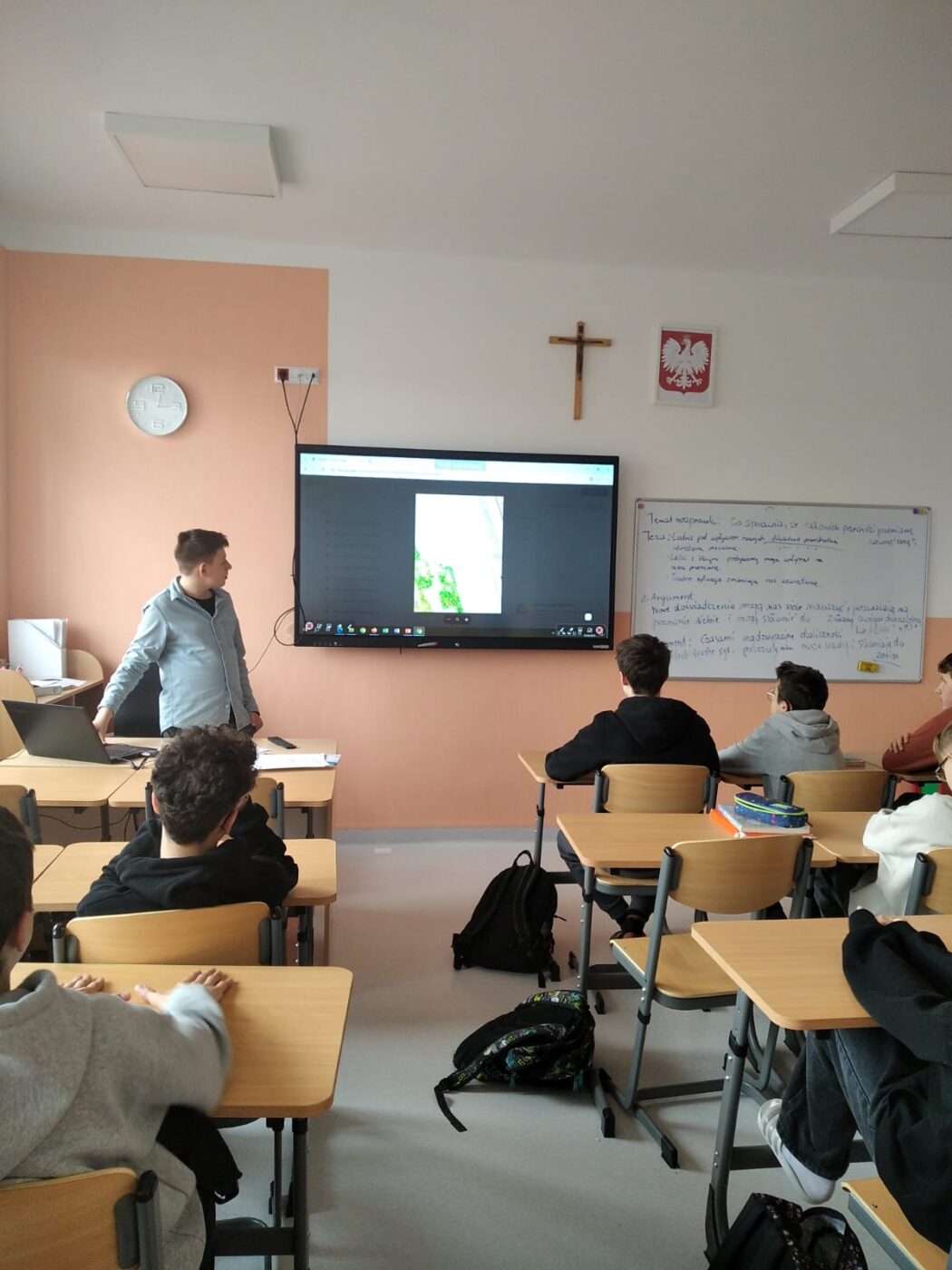
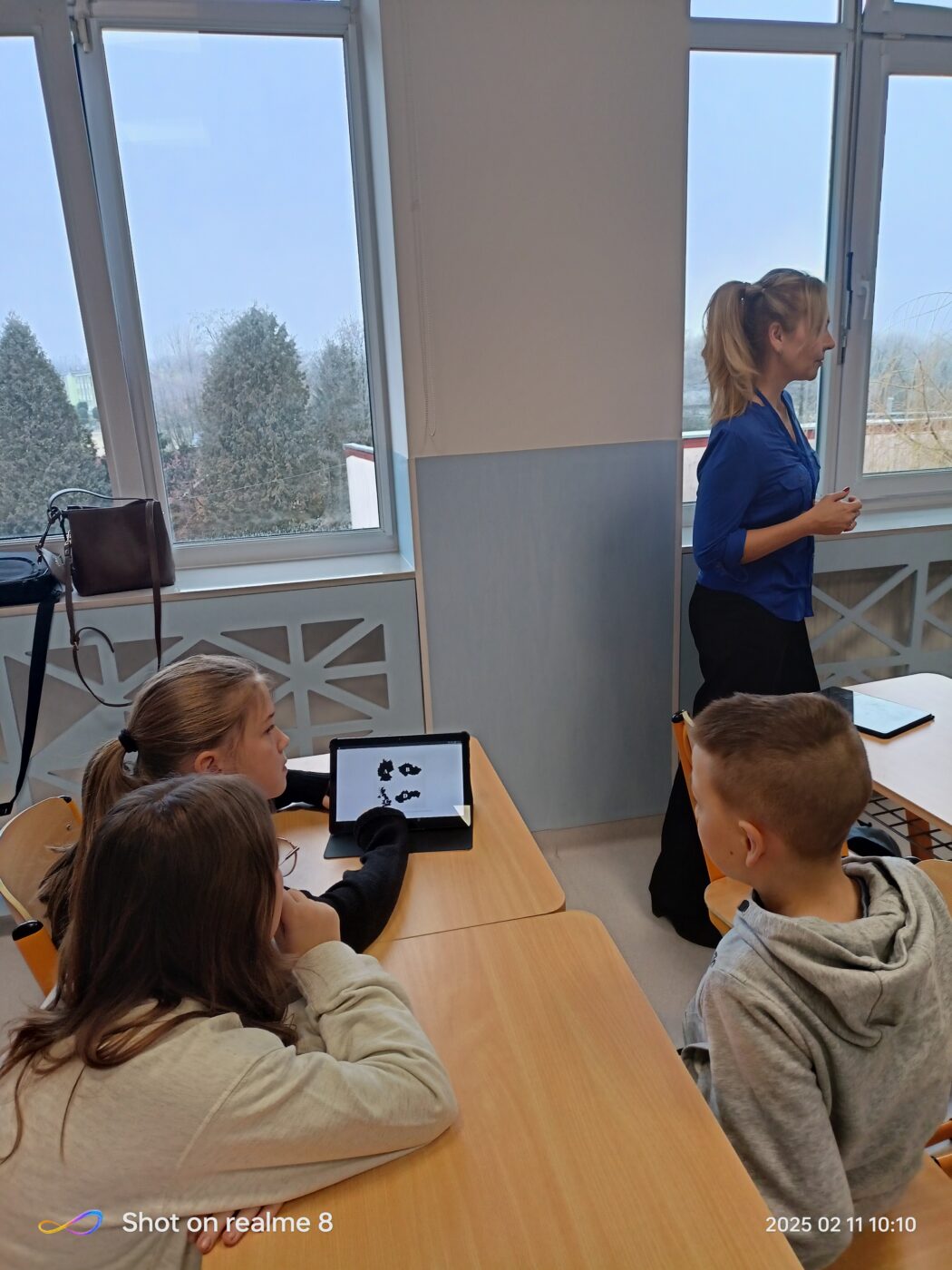
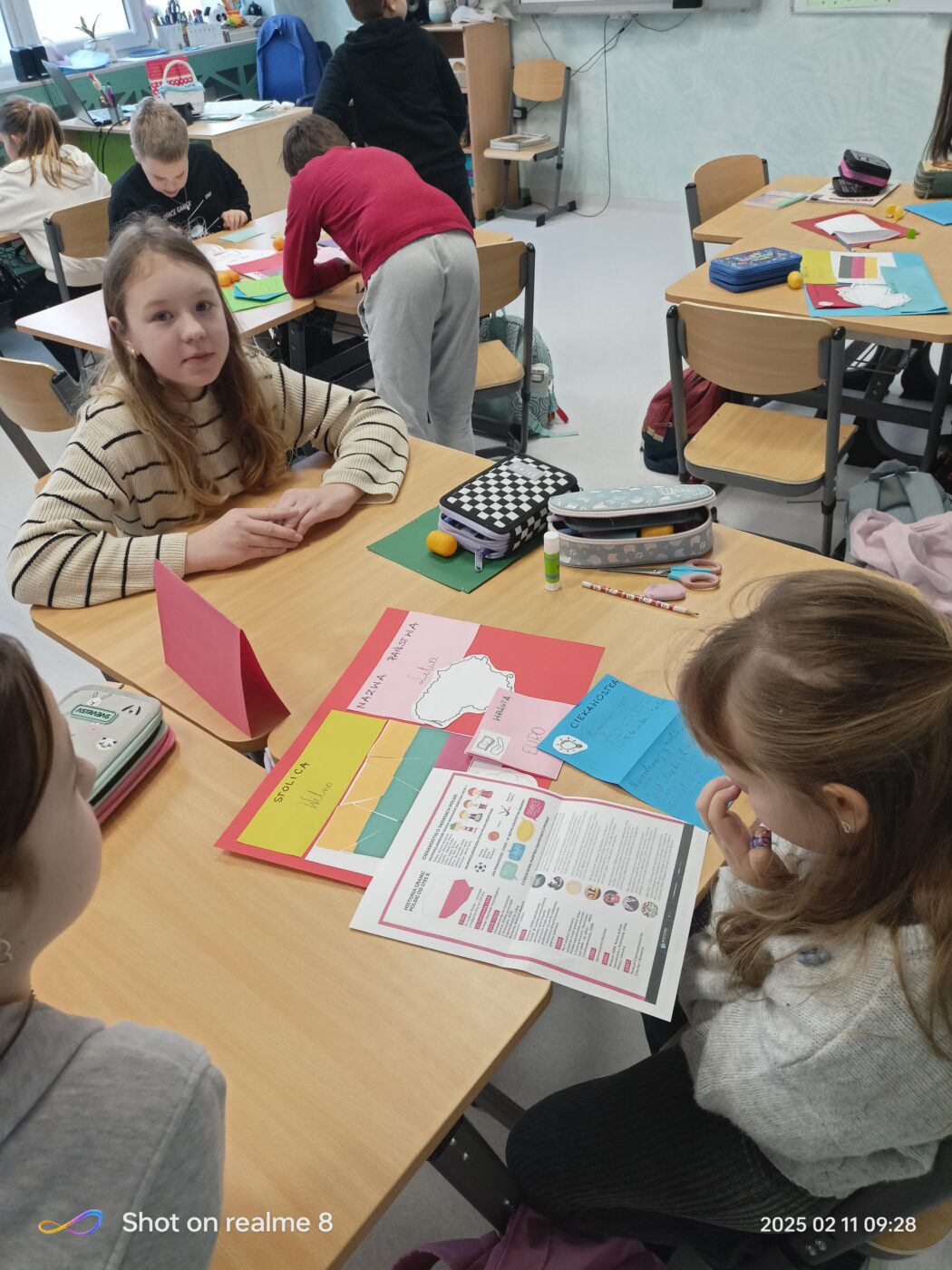
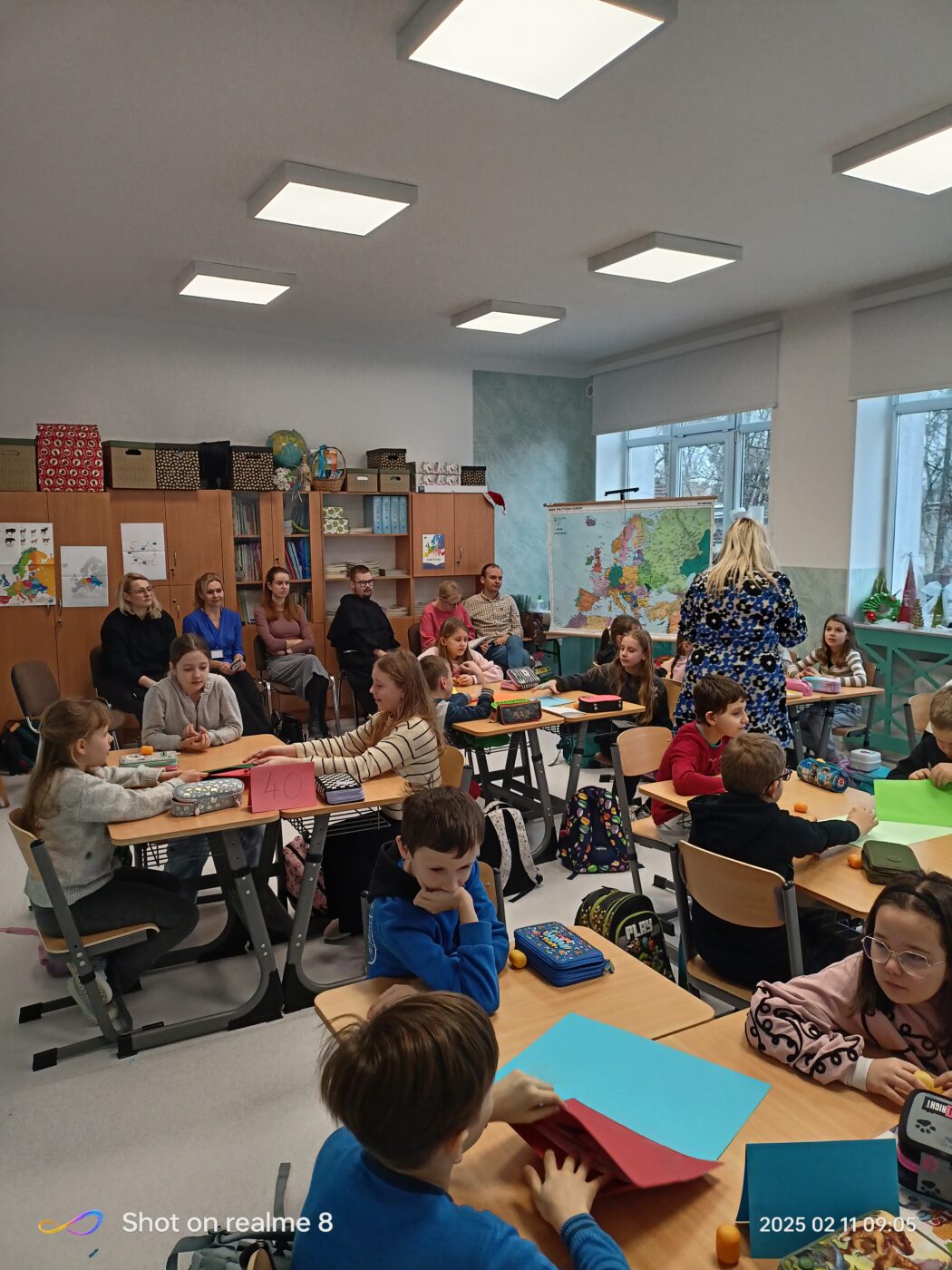
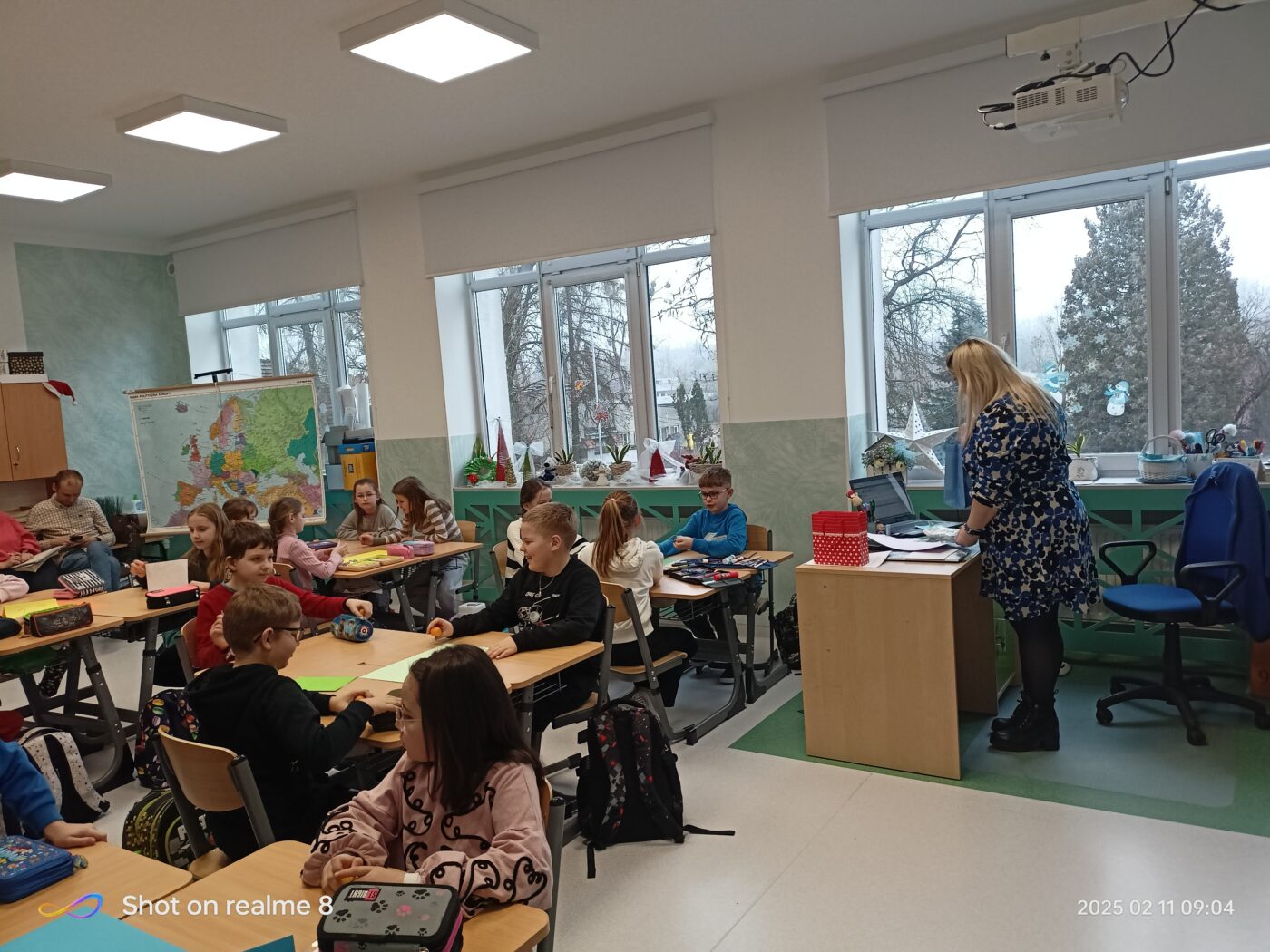
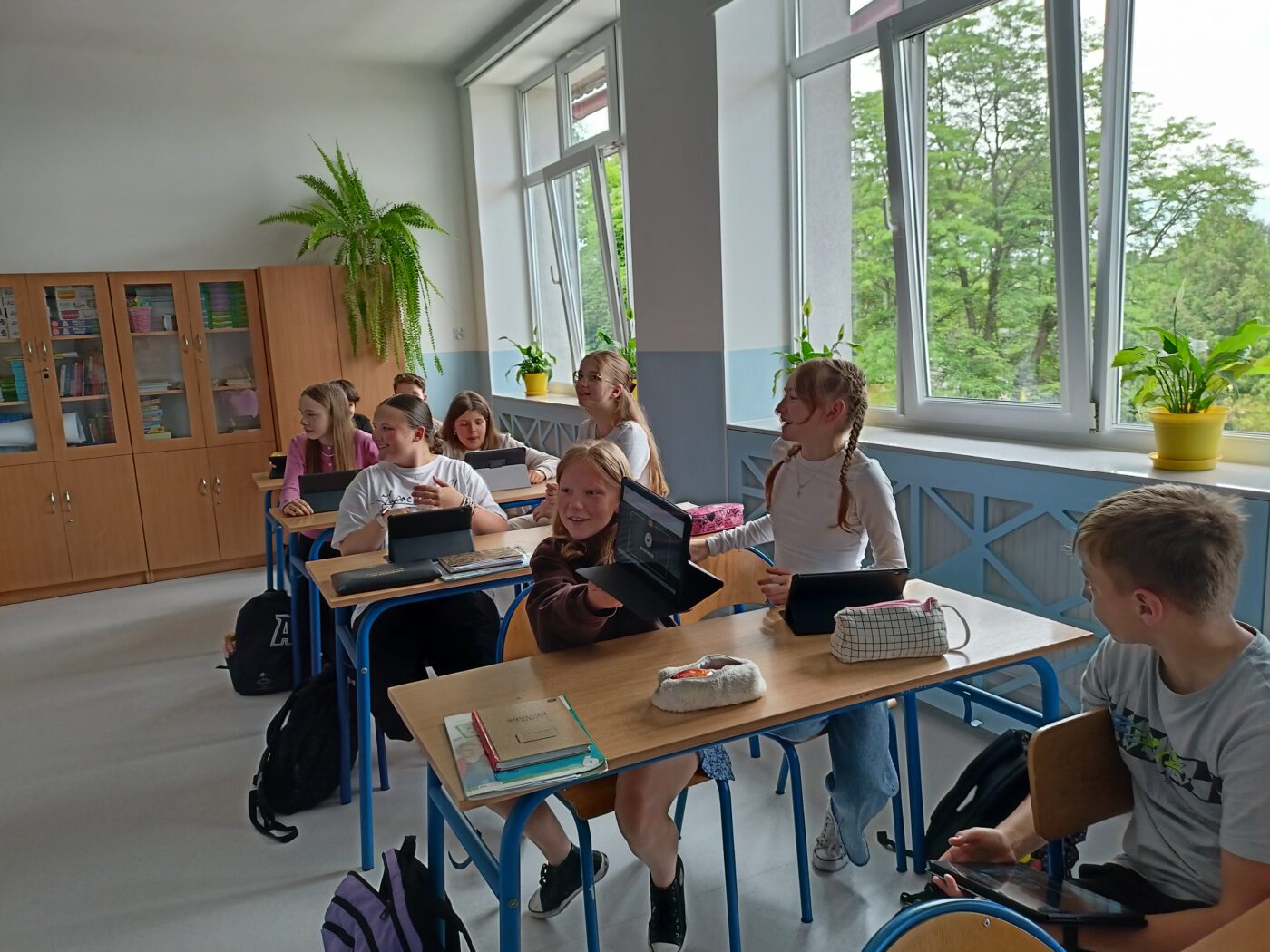
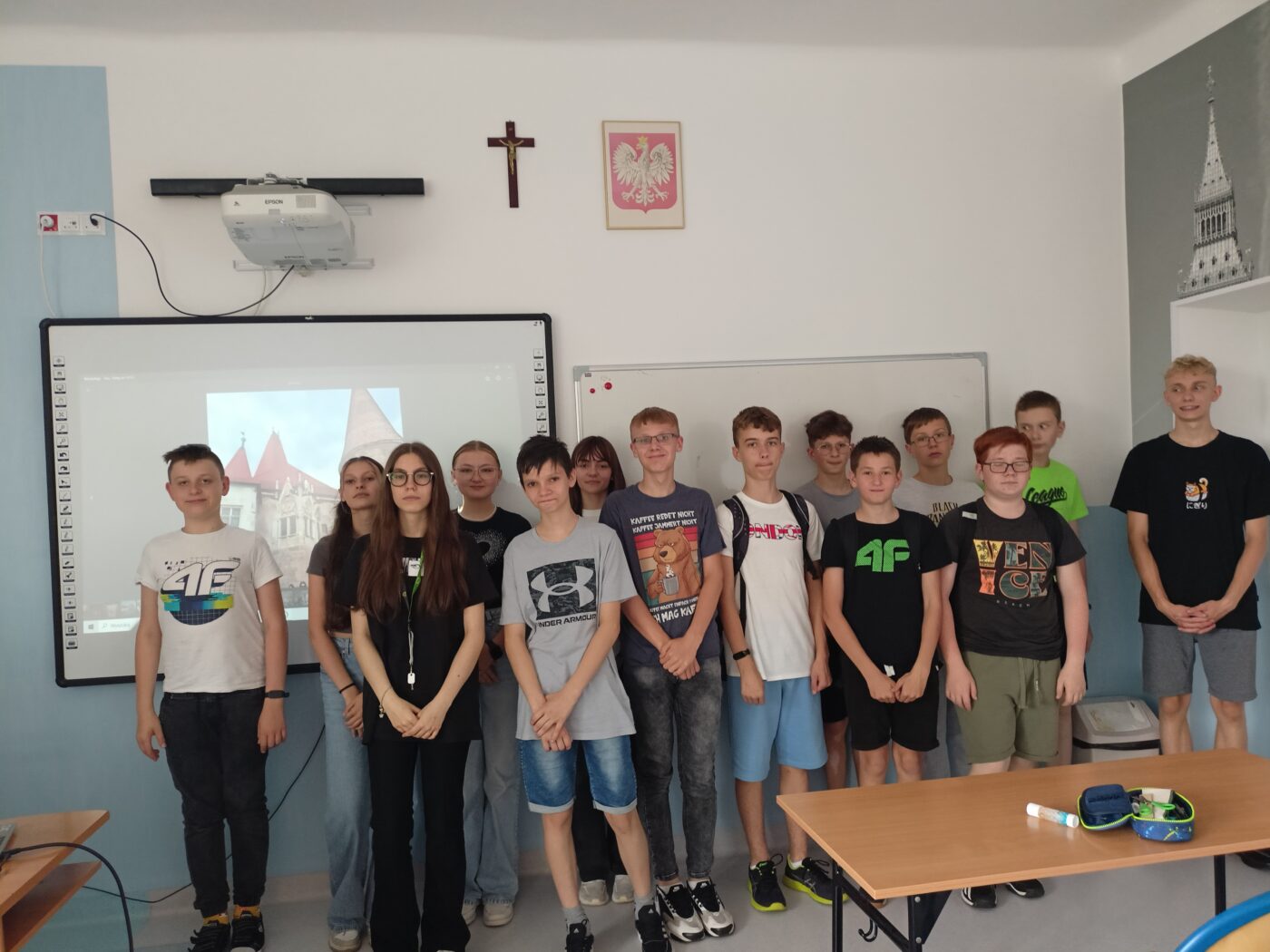
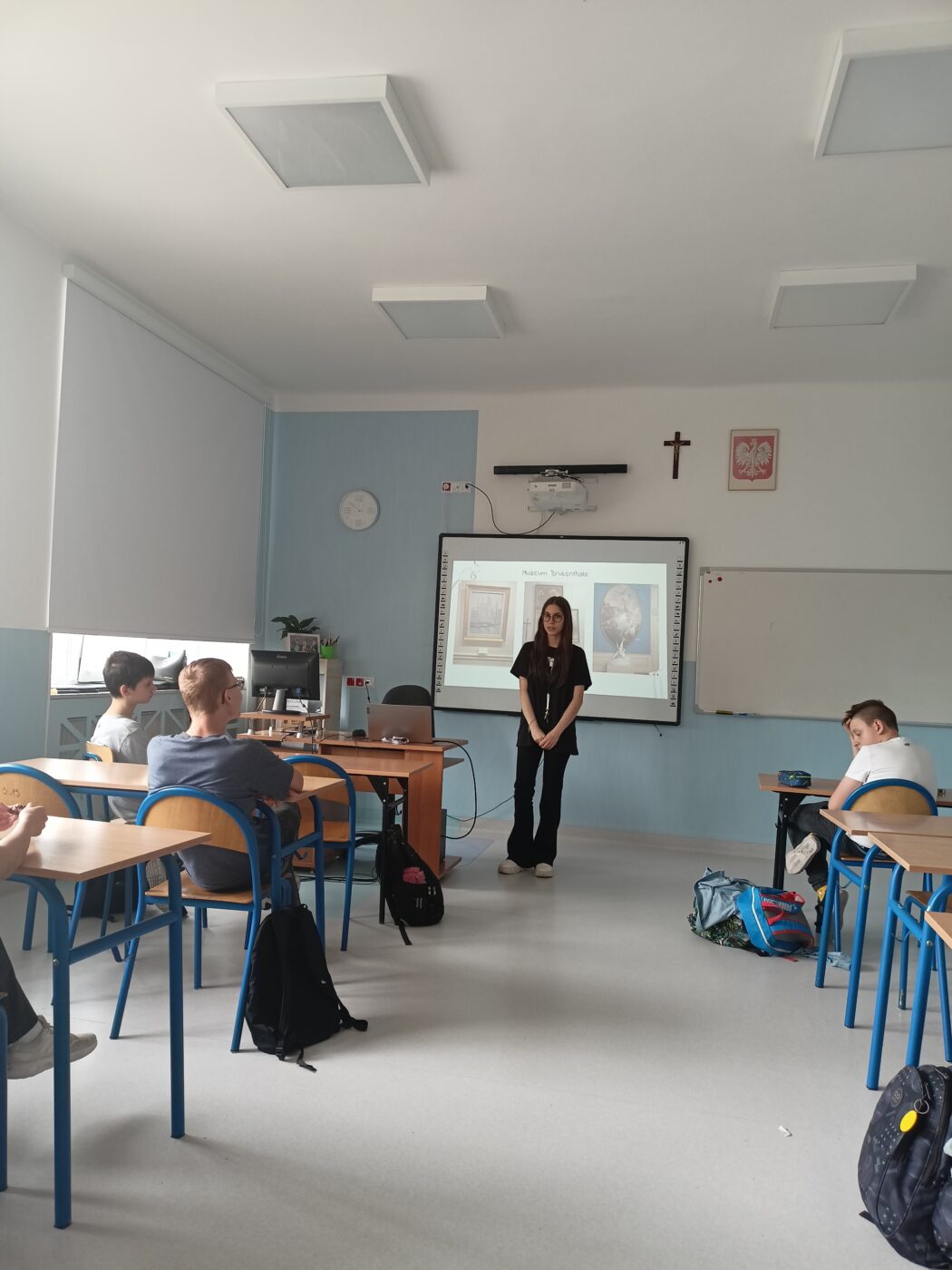
After returning from their international mobility as part of the Erasmus+ programme, our students had the opportunity to share their experiences with classmates during specially organized educational workshops. This was not only a great way to summarize their adventure, but above all, a perfect occasion for collaborative learning and integration.
During the workshops, students talked about the countries they visited, the customs they encountered, the languages and currencies they used, as well as the cultural similarities and differences they observed. They prepared presentations, quizzes, language games, and even offered tastings of traditional dishes! Their enthusiasm and commitment were truly inspiring.
What did the entire school community gain from these workshops?
 Greater cultural awareness – students learned about Europe’s diversity and the importance of openness to other cultures. New language knowledge – some groups tried using simple phrases in Romanian, Estonian, or Greek.
 Values like tolerance and cooperation – discussions about similarities and differences helped students realize that despite our unique traditions, we are all part of the same European family.
 Motivation to keep learning and join future projects – younger students are already excited about the possibility of taking part in similar initiatives. Development of social skills – student workshop leaders improved their presentation, communication, and organizational abilities.
We are incredibly proud of our young ambassadors and truly enjoy watching them share what matters most – their passion, knowledge, and open-minded view of the world.
Activities like these show that education can be a real adventure – full of discovery, connection, and shared experiences.
I. “Discovering Romania – A Cultural Journey”




II. „Estonia Through Our Eyes – A Cultural Lesson”
Presentation – coming soon
III. “Greek Adventures: A Cultural Experience to Remember”